Trolley
A first-person Unity game that turns trolley-problem scenarios into a branching collection of moral choices, action challenges, and audience-driven consequences. Demoed at LevelUp 2026.
Trolley by Derailed Studios
Technology Stack
Key Features
- Branching level progression driven by player choices and a graph-based orchestration system
- Dynamic stage loading that swaps complete level sets without rebuilding the main scene
- First-person exploration, trolley controls, and genre-shifting action challenges
- Live audience-rating visualization that reacts to player decisions
- Layered voice-over, music, sound effects, timed subtitles, and tutorial prompts
- Keyboard and controller support with configurable sensitivity and gamepad rumble
About Trolley
Trolley
Why
Trolley turns the classic trolley problem into a first-person game-show experience. Instead of presenting each dilemma as a static prompt, the game puts the player inside a sequence of interactive stages where choices change what happens next and how the audience responds.
Interesting Technical Points
Graph-Driven Level Orchestration
The game uses a ScriptableObject level graph to represent its branching structure. Each level node defines a stage prefab and maps named outcomes to the next node. A central game orchestrator follows those outcomes, while a level director owns the lifecycle of the active stage.
This keeps progression separate from individual level scripts. New scenarios can plug into the same flow, report an outcome, and let the graph decide which stage should run next.
Dynamic Stage Loading
Each level is packaged as a stage-set prefab and instantiated under a shared stage root. When a choice resolves, the current stage is removed before the next one loads. This allows very different scenarios and action sequences to share persistent systems without placing every environment in one scene.
Player Feedback and Presentation
The game combines first-person movement, trolley and lever interactions, controller rumble, voice-over, subtitles, music, and sound effects. An audience-rating system draws a live scrolling graph at runtime, turning player decisions into immediate visual feedback.
What It Demonstrates
Trolley demonstrates how a data-driven level graph and reusable lifecycle system can support a content-heavy Unity game whose stages differ substantially in mechanics, presentation, and outcome logic.

LevelUp Convention 2026
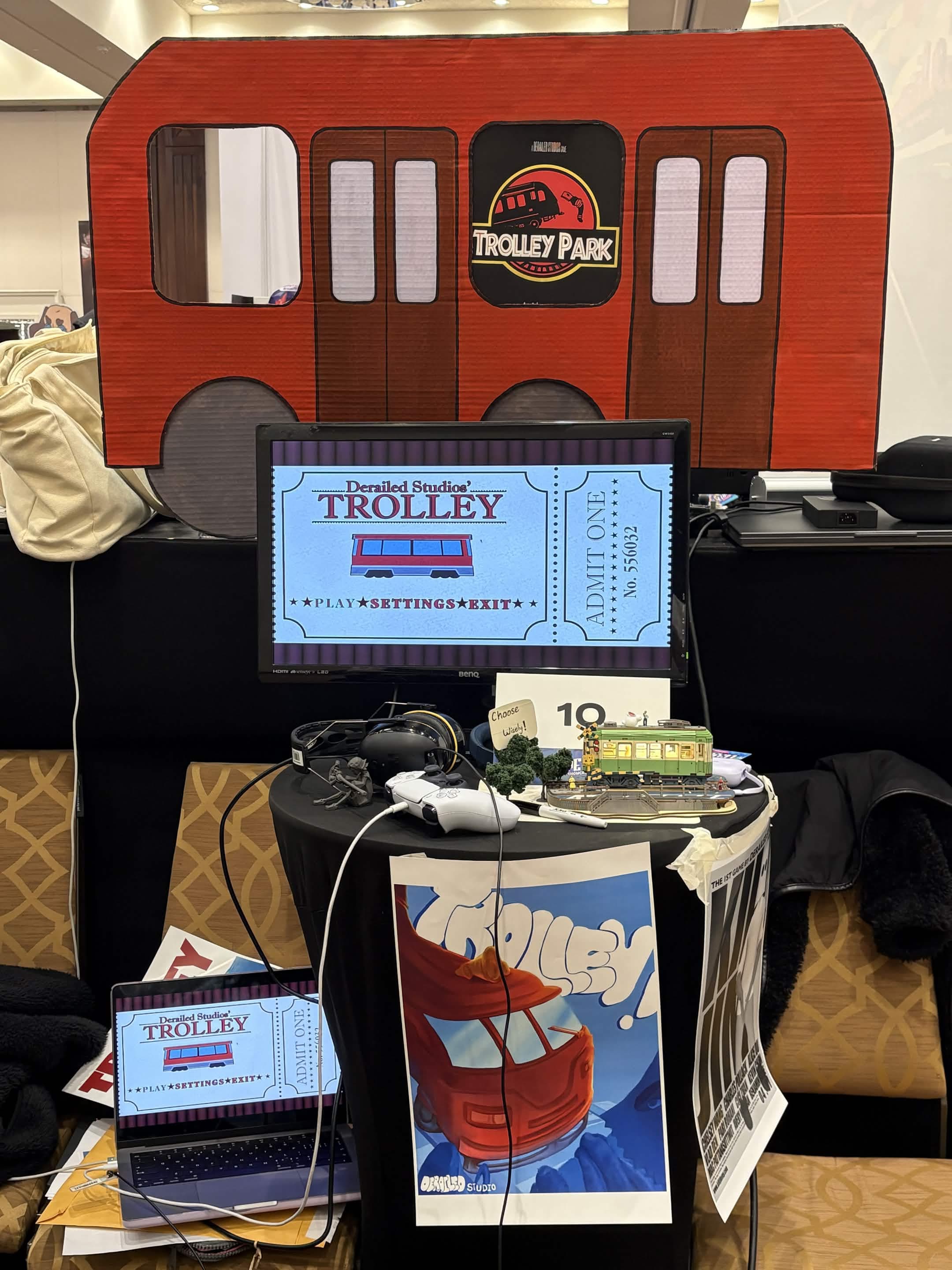
LevelUp Convention 2026